
By Ben Anderson
“I am thrown into a nature, and nature appears not only outside of me in objects devoid of history, but is also visible at the center of subjectivity.”
Happy Earth Day!!!
Reflecting on the impact and price of materialism—I felt a profound sense of responsibility. One that I haven't felt in a number of years…
12 years ago, just shy of a couple of weeks, and after a year's worth of annoyances and grievances with a kid on the bus—I had the BRILLIANT idea of stabbing him with a pencil. So, one day after he sat in "my" spot on the bus, I got out one of my pencils and thrust it into his side.
My actions as a child have left a profound mark on my life, even today. They taught me what it means to take responsibility—which I believe can be applied to understand our responsibilities to the environment and our Earth.
An Intersubjective World
This semester, I read a book called The Phenomenology of Perception by Maurice Merleau-Ponty. In this book he sets out to describe and understand what it means to be human. He explains how we go throughout the world and how the world appears to us—polarized by our projects and aims. What I found most interesting about it, though, was how it described our experience of others.
I will save you the lengthy explanation, though. Merleau-Ponty argues that we live in a world that's made for the "one." You sit in a chair… as one sits, you use the spoon… as one uses the spoon… you get the idea. The world is anonymous, in that it's made not just for you, but for me, for your neighbor, for your childhood best friend, your ex, ANYONE you can think of—the world was made for them to experience it. In addition, we don't experience each other as "objects" in our visual field, but as subjects. You act in the world, you actively receive it, take it up, and change it. Everyone does this—and so Merleau-Ponty declares that "We are, for each other, collaborators in perfect reciprocity: our perspectives slip into each other, we coexist through a single world." (Merleau-Ponty, 1945). The world just is—and we each participate in the shared experience of the world.
In all honesty, Merleau-Ponty's picture of a shared experiential world is pretty similar to what I talked about last year when I talked about Leibniz's interconnected Monads. As it turns out, Merleau-Ponty was pretty inspired by Leibniz. He says (quite strangely at first glance):
“Each act of seeing that I perform is instantly reiterated among all the objects of the world that are grasped as coexistent because each object just is all that the others ‘see’ of it. Thus, our formula above must be modified: the house itself is not the house seen from nowhere, but rather the house seen from everywhere.”

What Merleau-Ponty is trying to say is that, as we experience it, we understand the world as being innately perspectival. I can look at a water bottle—which presents itself as a strangely shaped rectangle—and understand that it is round because we, pre-reflectively, understand the other perspectives that it can be seen through and adapt our perceptual experience to that understanding. I understand what the water bottle looks like because I, without noticing, understand the other perspectives that could "see" the water bottle. We create an empathic bond with each other because, without realizing it, we "experience" each other's perspectives. While there stands to be a fascinating comparison between the works of Leibniz and Merleau-Ponty, I'm more concerned about what it actually means for us, in the world.
What I took from Merleau-Ponty is an understanding of responsibility. Because you and I have an empathetic connection to each other, I argue (in a different paper you can read here) that the notion of responsibility comes from our shared human experiences. Here, though, I want to extend that notion of responsibility and ask: what does it mean to take responsibility for the environment?
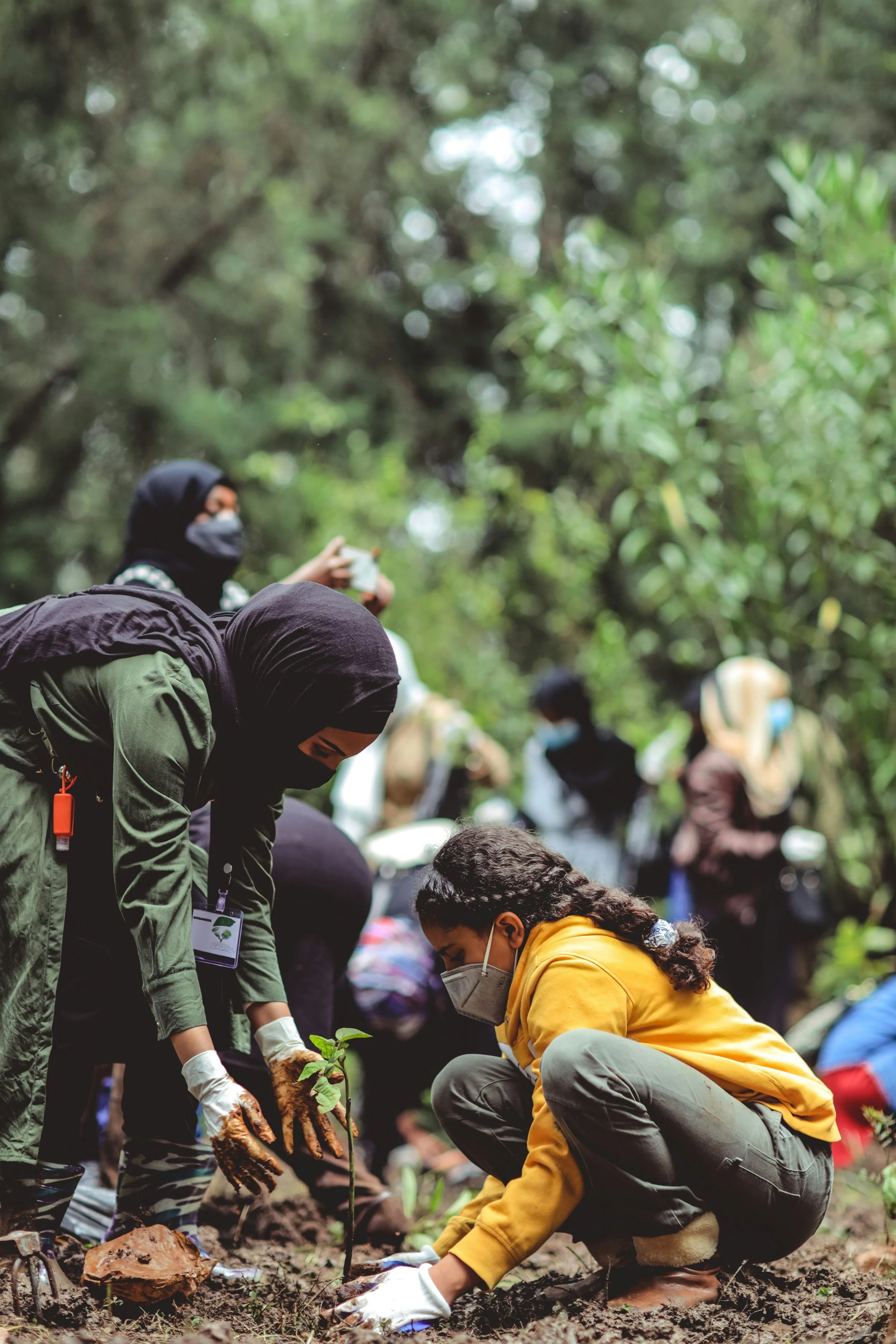
The Earth is, unsurprisingly, not human. However, that doesn't mean we don't have a responsibility to it. If you have a car, do you think you should take care of it? Should you clean up after you made a mess? Should you let something go to waste? I hope that your answers match mine. But what I really want to convey is how we have responsibilities to objects—especially those which we use frequently. I've used the same rice cooker for years and have made sure to keep it extra clean—even though it was only $20 at Target and I could feasibly replace it. The Earth, however, is far more precious than my rice cooker. Our Earth is the only one we've got, and we have a responsibility to maintain it, even if that means sacrificing conveniences.
Taking responsibility for the climate is not some lofty, abstract gesture reserved for politicians and activists—it is deeply, uncomfortably personal. The IPCC's Sixth Assessment Report put it plainly: human influence on the warming of the atmosphere, ocean, and land is "unequivocal" (IPCC, 2021). Not probable. Not likely. Unequivocal. And yet, most of us carry on buying, consuming, and discarding as though the Earth were a rice cooker we could just replace when it breaks. Think back to Merleau-Ponty's picture of the intersubjective world. If our perspectives genuinely slip into each other, then the carbon I pump into the atmosphere doesn't stay neatly in my lane—it bleeds into the air your children breathe, into the water that floods someone else's coastline, into the soil a farmer on the other side of the planet depends on entirely. The damage I do is never mine alone to absorb.
And yet—responsibility is not the same as despair, which is a mistake I think a lot of people make. The Paris Agreement, adopted by 196 parties under the UN Framework Convention on Climate Change, was at its core an act of collective accountability. It recognized that climate change represents "an urgent and potentially irreversible threat to human societies and the planet" (UNFCCC, 2015). What struck me reading that language was how genuinely alarmed it sounded—not bureaucratic, not detached, but human. The nations of the world, sitting in a room together, essentially admitting: we made a mess, and we have to clean it up. That is responsibility in its most honest form: slow and unglamorous.
So what does that responsibility actually look like in practice? Responsibility without action is really just guilt disguised in a trench coat. The IPCC's Climate Change 2022: Mitigation of Climate Change—Working Group III's contribution to the Sixth Assessment Report—dedicated, for the first time, an entire chapter to what individuals can actually do. The report identifies demand-side solutions as encompassing consumers' technology choices, behavioral changes, and lifestyle shifts (IPCC, 2022). What you eat, how you travel, what you throw away—these aren't personal quirks, they are environmental acts. The report further found that demand-focused interventions can meaningfully reduce emissions across transportation and other sectors when paired with the right policies and infrastructure. And crucially, the IPCC's 2023 Synthesis Report clarifies that by sharing best practices and mobilizing sufficient resources, any community can reduce carbon-intensive consumption—not just wealthy ones with the luxury of solar panels (IPCC, 2023). Responsibility, it turns out, is distributed—much like Merleau-Ponty's shared world. And it starts, as it always does, with the willingness to own what you've done and then do something about it.
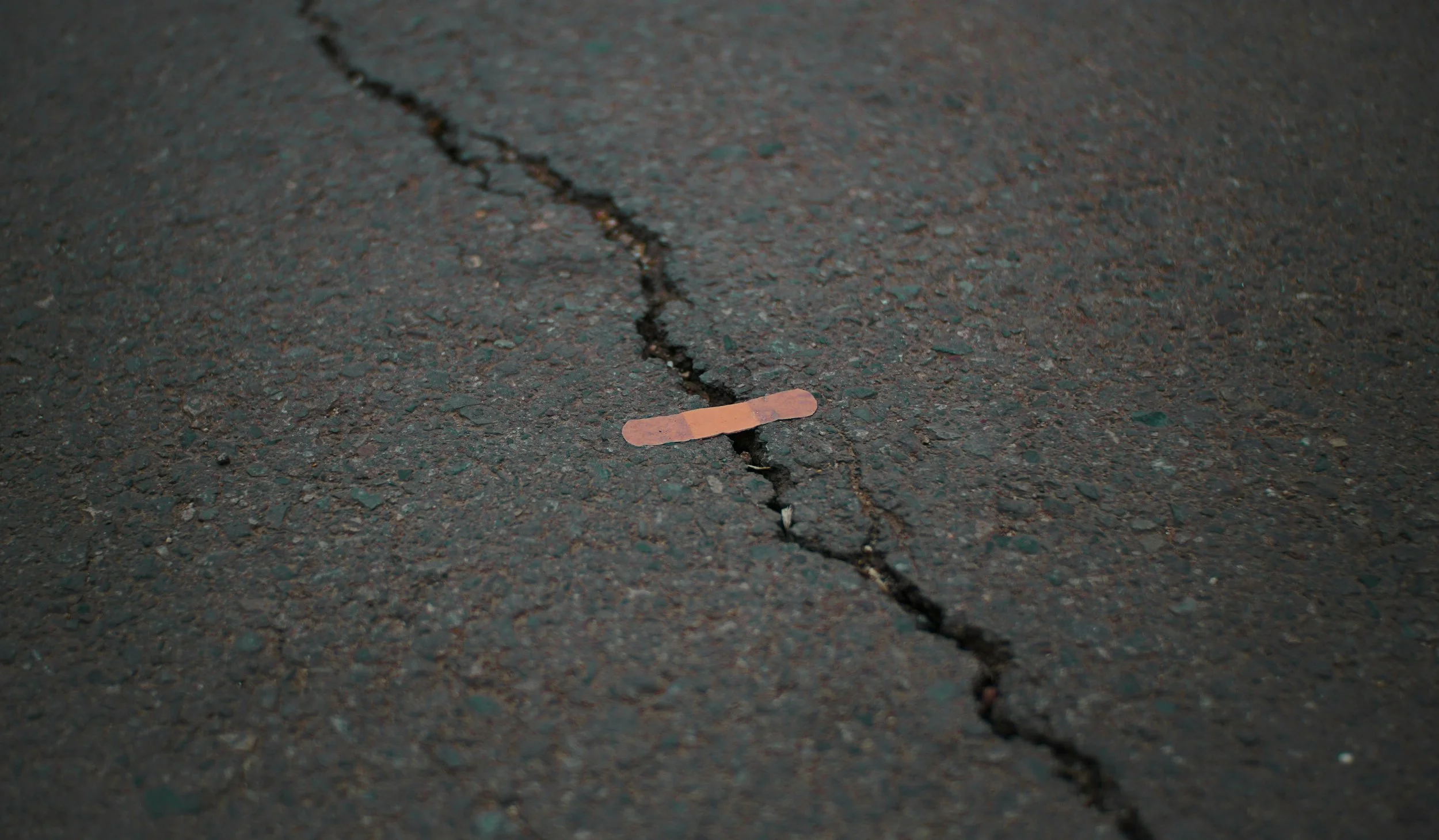
I've learned to take responsibility from my worst failings in life. I ask that we not "stab" the planet the same way I did to my peer. He didn't deserve it, and neither does the planet.!
We are each responsible for the Earth; we just need to act like it.
Want to learn more about human interconnectedness? Check out the Interconnectedness module on My Best Self 101!!!
“The land remembers the hands that tend it, and in its green, eternal memory, it holds the promise of tomorrow.”
References
Masson-Delmotte, V., Zhai, P., Pirani, A., Connors, S. L., Péan, C., Berger, S., Caud, N., Chen, Y., Goldfarb, L., Gomis, M. I., Huang, M., Leitzell, K., Lonnoy, E., Matthews, J. B. R., Maycock, T. K., Waterfield, T., Yelekçi, O., Yu, R., & Zhou, B. (Eds.). (2021). Climate change 2021: The physical science basis. Contribution of Working Group I to the Sixth Assessment Report of the Intergovernmental Panel on Climate Change. Cambridge University Press. https://doi.org/10.1017/9781009157896.
Shukla, P. R., Skea, J., Slade, R., Al Khourdajie, A., van Diemen, R., McCollum, D., Pathak, M., Some, S., Vyas, P., Fradera, R., Belkacemi, M., Hasija, A., Lisboa, G., Luz, S., & Malley, J. (Eds.). (2022). Climate change 2022: Mitigation of climate change. Contribution of Working Group III to the Sixth Assessment Report of the Intergovernmental Panel on Climate Change. Cambridge University Press. https://doi.org/10.1017/978.
United Nations Framework Convention on Climate Change. (2015). Paris Agreement.https://unfccc.int/sites/default/files/english_paris_agreement.pdf.