

By Chris Craven
“Dwell on the beauty of life. Watch the stars, and see yourself running with them.”
There was a day, one I’ll never forget, when walking through my own front door felt like stepping into a miracle.
We had just returned home briefly between hospital stays. My son Wyatt’s body was exhausted from chemotherapy, my own heart was stretched thin, and every hour inside the oncology unit had felt heavy. The quiet hum of machines, the fluorescent lights, the interruptions through the night, those details had become our “new normal.” So when we finally made the drive home, unlocked the door, and stepped into the familiar light of our living room, something inside me shifted.
Suddenly, everything ordinary felt holy.
The kids spilled into the hallway with the kind of joyful chaos only siblings can create. The couch looked impossibly soft. The smell of dinner drifted from the kitchen. Nerf bullets littered the floor. Slime kits were half-open on the counter. Dishes were piled high from the night before.
Everywhere I looked, there were tiny signs of life. Real, beautiful, messy life.
And for the first time, instead of feeling overwhelmed by the mess, I felt awestruck by it.
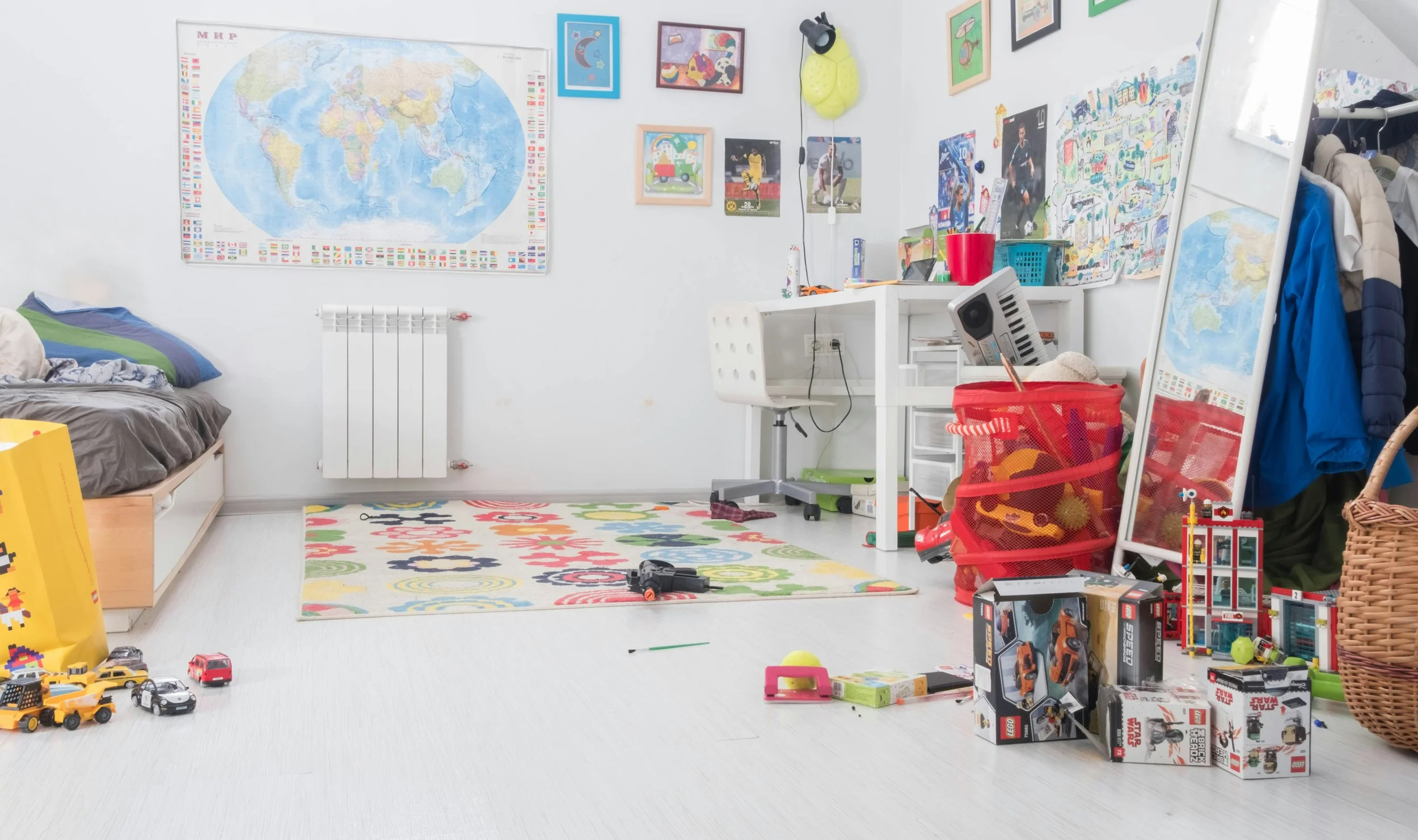
“Being home has been such a blessing,” I wrote in my blog that night. “Who would have guessed that just being home, with my children making messes and noise and memories, would feel like such a sacred privilege?”
It was a perspective that had quietly slipped away from me over the years. Like so many of us, I had been moving through my days somewhat on autopilot. Clean up the kitchen, fold laundry, run errands, pay the bills, tuck the kids into bed, repeat. But after weeks of beeping monitors, harsh chemo, and sterile hospital walls, those same routines felt like the most absolutely beautiful and sacred blessings. I savored every single second. The bedtime stories, cooking my children’s favorite meals, even tripping over shoes in the hallway or washing endless amounts of dishes. I remember feeling so incredibly lucky to be washing a plate my child had been able to eat off of, and shedding tears for that experience. Everything felt like the first time. In that moment, awe came rushing back into my life.
Awe Is More Than Wonder, It’s a Reset Button for the Mind
Researchers define awe as the feeling we get when something vast or meaningful expands our understanding of the world (Keltner & Haidt, 2003). Traditionally we think of awe as something we experience while watching a sunrise or standing at the base of a mountain, but research shows people often experience awe in everyday life, especially in response to other people, ideas, or moments that move them (Bai et al., 2017; Stellar et al., 2017).
Scholars like Dacher Keltner argue that awe can reshape what we pay attention to, gently shifting us away from our own stress and toward a sense of belonging, perspective, and meaning (Keltner & Haidt, 2003; Stellar et al., 2017). Emerging research also links the tendency to feel awe with measurable physical benefits, such as lower levels of proinflammatory cytokines (a negative marker of health) and higher life satisfaction and well-being (Stellar et al., 2017; summarized from Rudd et al., 2012; Van Cappellen et al., 2013). Awe is also linked to greater positive emotion and emotional well-being across several studies (Stellar et al., 2017). In one study, simply taking a short weekly ‘awe walk’ and intentionally noticing beauty or wonder significantly increased joy and reduced daily distress (Sturm et al., 2022).
Awe doesn’t remove difficulty from our lives. But it does remind us that even in difficulty, beauty still exists. And it doesn’t require something extraordinary. Sometimes all it takes is looking at your messy kitchen with new eyes.
How Returning Home Rewired My Ability to See
During those few precious days between hospital stays, everything slowed down. We cuddled on the couch late into the night. We baked treats Wyatt requested, even when we were too tired. Our kids made pillow forts and slime experiments and left footprints on the floor and fingerprints on the walls. All marks of a life well lived happening right in front of us. I remember thinking, “This used to feel normal. How did I ever take this for granted?”
Psychologists call this shift “the small self.” It’s that feeling of being smaller in the best way. Less preoccupied with your own worries and more connected, humbled, and grateful in the face of something larger than you. In studies, awe reliably leads people to describe themselves as smaller or less significant and more a part of bigger groups like community, humanity, or nature (Piff et al., 2015; Bai et al., 2017). In other words, awe doesn’t erase you, it right-sizes you, placing your life back into a wider and often more compassionate perspective. Awe invites us to stop rushing and start noticing. That week taught me something I had spent years overlooking, the extraordinary is hidden inside the ordinary. Awe isn’t rare. We just forget to look for it.

What Awe Can Do for You (Even If Your Life Feels Rushed or Hard Right Now)
Positive psychology research consistently suggests that awe:
Is associated with better physical health markers, such as lower levels of proinflammatory cytokines, and with boosts in life satisfaction following awe experiences (Rudd et al., 2012; Stellar et al., 2017).
Can broaden our focus beyond day-to-day worries and toward a sense of being part of something larger, which is associated with greater well-being (Piff et al., 2015; Bai et al., 2017; Yaden et al., 2017).
Can increase feelings of time abundance and willingness to help others, two shifts linked to greater life satisfaction and meaning (Rudd et al., 2012; Piff et al., 2015; Stellar et al., 2017.)
Strengthens connection with others by increasing generosity, prosocial behavior, and a sense of inclusion in one’s community (Piff et al., 2015; Bai et al., 2017).
Often shows up in self-transcendent experiences that people describe as some of the most meaningful moments of their lives, deepening their sense of purpose (Yaden et al., 2017).
And here’s the best part, you don’t need a major life event to access awe. You just need a moment of intention.
Here are 5 Simple Ways to Bring Awe Back Into Your Everyday Life
These practices are grounded in research and they begin with the smallest shifts in awareness.
1. Pause and Notice One Beautiful Thing Each Day
It could be:
The morning light on your wall
Your child’s laughter
The way a candle flickers
The rhythm of your breath
A tree outside your window
Awe begins by noticing
2. Create “Micro-Moments of Presence”
Put your hand over your heart.
Take one slow breath.
Ask: “What here is worth noticing?”
Even a moment of mindful attention can shift your emotional state. Self-transcendent practices like brief mindfulness exercises have been linked to reductions in depression and increases in well-being (Yaden et al., 2017).
3. Let Ordinary Moments Be Enough
The next time you’re:
Washing dishes
Buckling a child into the car
Making breakfast
Picking up toys
Try saying: “I get to do this.”
This kind of reframing can foster gratitude and may help cultivate self-transcendent emotions like awe (Stellar et al., 2017).
4. Go on a Weekly Awe Walk
Experiments show that when people are guided to focus on awe-eliciting scenes, like powerful nature, inspiring acts, or memories of awe, they reliably report more awe than people in control conditions (Piff et al., 2015; Bai et al., 2017). In an 8-week randomized trial, weekly 15-minute “awe walks” led to greater awe, joy, prosocial emotions, increased smiling, a growing “small self,” and meaningful reductions in daily distress compared with control walks (Sturm et al., 2022). Try walking slowly, looking up, noticing colors, shapes, clouds, and the life happening around you. Even 10 minutes can change how you feel about your day.
5. Tell Someone About a Moment That Moved You
Recalling awe experiences has been shown to increase feelings of connection and collective engagement. People feel more included in their community and less self-focused after awe compared with other emotions (Piff et al., 2015; Bai et al., 2017). While the studies focus on privately recalling awe, sharing those moments with someone you trust is a natural extension that can deepen connection in real life too.

Awe Didn’t Remove My Pain, but It Transformed My Experience of Life
I didn’t suddenly stop being afraid. I didn’t stop wishing and praying for healing, answers, or certainty. Awe didn’t erase the hard things.
But it did this:
It softened the sharp edges.
It lifted my perspective.
It reminded me that life, even when fragile, is overflowing with beauty.
It anchored me in the moments that mattered most.
And it still does. Awe is a gift we can return to again and again. A quiet invitation to notice what is already here. You don’t need a crisis to wake up to your life the way I did. You just need a moment.
A moment to pause.
A moment to notice.
A moment to breathe in the wonder you’ve walked past a thousand times.
Today, look for something that surprises you. Something that softens you. Something that makes you whisper, even quietly, “Wow… I almost missed that.”
Because the extraordinary is already here. It always was. You just get to see it now.
“All this he saw, for one moment breathless and intense, vivid on the morning sky; and still, as he looked, he lived; and still, as he lived, he wondered.”
References
Keltner, D., & Haidt, J. (2003). Approaching awe, a moral, spiritual, and aesthetic emotion. The Return of Pleasure, 17, 297–314. https://doi.org/10.1080/02699930302297
Piff, P. K., Feinberg, M., Dietze, P., Stancato, D. M., & Keltner, D. (2015). Awe, the small self, and prosocial behavior. Journal of Personality & Social Psychology, 108, 883–899. https://doi.org/10.1037/pspi0000018
Rudd, M., Vohs, K.D., & Aaker, J. (2012). Awe expands people's perception of time, alters decision making, and enhances well-being. Psychological Science, 23, 1130–1136. https://doi.org/10.1177/0956797612438731
Stellar, J. E., Gordon, A. M., Piff, P. K., Cordaro, D., Anderson, C. L., Bai, Y., Maruskin, L. A., & Keltner, D. (2017). Self-transcendent emotions and their social functions: Compassion, gratitude, and awe bind us to others through prosociality. Emotion Review, 9, 200–207. https://doi.org/10.1177/1754073916684557
Sturm, V. E., Datta, S., Roy, A. R. K., Sible, I. J., Kosik, E. L., Veziris, C. R., Chow, T. E., Morris, N. A., Neuhaus, J., Kramer, J. H., Miller, B. L., Holley, S. R., & Keltner, D. (2022). Big smile, small self: Awe walks promote prosocial positive emotions in older adults. Emotion, 22, 1044–1058. https://doi.org/10.1037/emo0000876
Van Cappellen, P., Saroglou V., Iweins, C., Piovesana, M., & Fredrickson, B. L. (2013). Self-transcendent positive emotions increase spirituality through basic world assumptions. Cognition and Emotion (Print), 27, 1378–1394. https://doi.org/10.1080/02699931.2013.787395
Yaden, D. B., Haidt, J., Hood, R. W., Vago, D. R., & Newberg, A. B. (2017). The varieties of self-transcendent experience. Review of General Psychology, 21, 143–160. https://doi.org/10.1037/gpr0000102
Yang Bai, Maruskin, L. A., Serena Chen, Gordon, A. M., McNeil, G. D., Stellar, J. E., Kaiping Peng, & Keltner, D. (2017). Awe, the diminished self, and collective engagement: Universals and cultural variations in the small self. Journal of Personality & Social Psychology, 113, 185–209. https://doi.org/10.1037/pspa0000087