

By Kathleen Ririe
“It’s your reaction to adversity, not adversity itself that determines how your life’s story will develop.”
Spring is (almost) here! With the sun shining and the world awakening, it is natural to feel a sense of enthusiasm for life. I find myself feeling that fresh desire to dig into spring cleaning, sign up for a half marathon, try new recipes, and get outside. While these things are all good, beware of giving into the urge to speed up too quickly. As with running a long race, sprinting can burn you out quickly, whereas a gradual acceleration and maintainable pace can help ensure that you have enough left in the tank to make it successfully to the finish line. Resilience is defined as the ability to recover successfully after a change, challenge, or adversity. It can be easy to equate resilience with “doing it all.” To the untrained eye, we may assume that someone who is having lots of achievement is also resilient, however, resilience is not found in the ability to stretch, but in the ability to recoil. The space BETWEEN stop and go is the place where resilience is grown and maintained—it takes place in what I like to call the yellow zone.
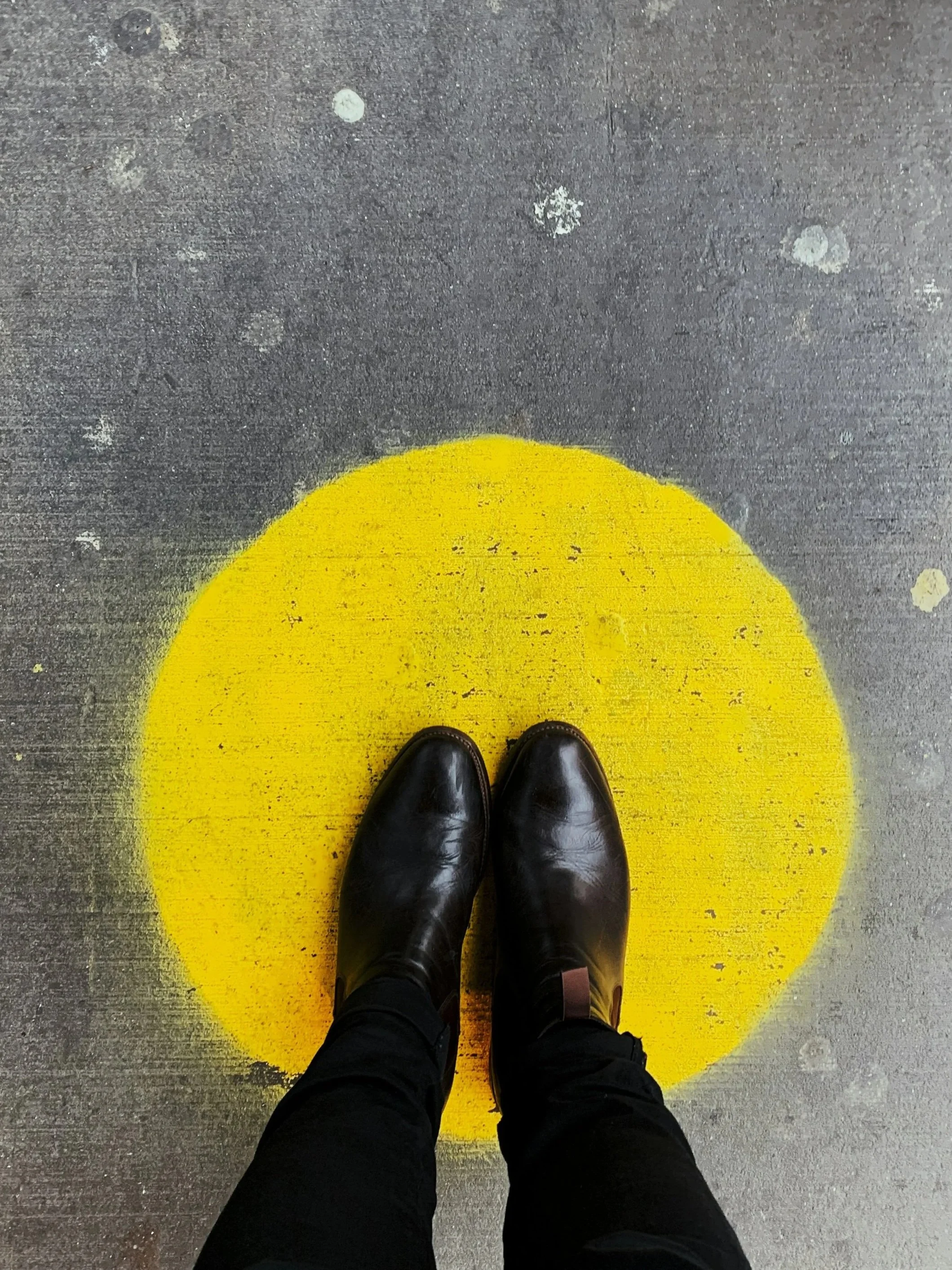
The Yellow Zone
Resilience enables us to not only “bounce back”, but to adapt and thrive in challenging situations. In Rick Hansonn’s book Resilient: How to Grow an Unshakeable Core of Calm, Strength, and Happiness he describes our bodies as being in either the red zone or the green zone. The red zone is associated with our sympathetic nervous system- think “fight or flight”. As we rev up into the red zone in response to threats, major stressors, or relationship distress– cortisol and other stress hormones rush through the bloodstream preparing us to fight. In the green zone, the parasympathetic system (“rest and digest”) is king. The mind and body are calm and the body is busy refueling and repairing itself. Although there are times when the red zone can be helpful (like when confronted by a coyote on our morning trail run)- often the threats we experience are not life or death and do not merit the same physical response. So how can we foster the ability to successfully navigate back into the green zone with greater control and intention (aka: how do we build resilience)? Perhaps spending more time in what I call “the yellow zone”—the place of slowing down—can help. Research shows that slowing down through mindfulness, savoring, and breathing exercises can build our positive adaptation and resilience.
3 Ways to Build Resilience
1. Mindfulness
“Wherever you are—be all there.”
Mindfulness is simply paying attention to the present moment without judgement. Current research suggests that people with higher levels of mindfulness have greater psychological well-being (Afrashteh & Hasani, 2022), may have more cognitive flexibility, and are more resilient (Zhang et. al, 2023). Being able to be in the moment without being swept away by it, is key to being able to “bounce back” in a challenging situation.
Practicing mindfulness can reduce stress and increase cognitive flexibility. Recently I had the opportunity to practice this as I was traveling from the United States to France. On the morning of my departure, I received several contradictory text messages from the airline indicating that our flight had been first delayed, and then cancelled. The next flight would arrive in Paris nearly two days past schedule. Those that I was traveling with became justifiably tense and stressed. We had reservations to make it to, which could not be refunded or moved. My heartbeat sped up, my face flushed, and that all too familiar knot of anxiety started to twist inside me as I waited on the line for my turn to speak to the airline attendant. Stress built as I waited on hold simultaneously receiving additional foreboding texts. I planned my acerbic speech for the undeserving reservations member. But just as my call went through, I had a thought to try mindfulness. I simply stopped. Noticed my feelings, the reaction of my body to the news, and I decided to just allow all those feelings to be present, without needing to judge, give in to, or push them aside. With that thought, the twisting in my stomach loosened. My head cleared. The woman answered and I was able to de-escalate the tensions between us and work through solutions quickly. In fact, because I wasted no time in expressing anger, I was able to rebook us on another airline with only minutes to spare before the international flight closed for reservations. Practicing mindfulness, allowed me to quickly shake off the frustration and move forward with positive momentum that proved to be key.
Cultivate mindfulness so that it's a tool in your resilience toolbox with this free module or with the MyBestSelf101 Mindfulness for Humans Course.
Additional accessible mindfulness meditation resources include apps like Insight Timer or Calm.

2. Savoring
“Life moves pretty fast. If you don’t stop and look around once in a while, you could miss it.”
Have you ever taken a bite of something really delicious and gasped because it was so good? That is what savoring feels like. Savoring, the close cousin to mindfulness, couples presence WITH positive emotion. You’ve probably heard the phrase “stop and smell the roses”. When we savor, we stop and notice both WHAT is happening and also that we LIKE it. Savoring can be a powerful tool in the resilience toolbox and can be an easy way to transition from the red zone into the yellow zone, and back to the green. Researchers are finding that not only does savoring increase positive wellbeing, but those who practice savoring regularly also report higher resilience, lower depressive symptoms, and increased happiness over time (Smith & Hanni, 2019, Smith &Hollinger-Smith, 2015).
You might be wondering: How do I practice savoring? Great question! Here are a few easy suggestions to try:
Rick Hanson’s 3-Second Method: this method is literally a stop and smell the roses approach. You simply notice when you are experiencing positive emotion (think happy news from your best friend, finding a great deal, feelling the sun on your face, an ice cold drink after a workout, the smell of warm cookies…you get the point). Now you just breathe in for 3 seconds while imagining this positive feeling really sinking in. That’s it! Easy, right?
Savoring Through Photos: MyBestSelf101 has a great list of savoring strategies! One of my favorites is savoring through photos. Scroll through your pictures (you could even intentionally go to a happy moment, vacation, or activity in your reel). Now slow down and see if you can recall details from that moment. Who was there? What did you feel? What was happening for your 5 senses? Try to recreate the positive energy from that moment and let it sink in.
Vocalizing Positive Moments: One of my own favorite strategies is to vocalize my positive emotions in the moment with an intentional affirmation. My kids think I’m cheesy, but they know that if the leaves on the mountains are changing colors or the flowering trees are blooming- they will hear something like, “Can you even believe this day?!” or “Emergency! Everyone look at that incredible tree!”. I have found that even saying it out loud to myself increases my positive emotions when I’m alone.
3. Breathing Exercises
“The breath is the intersection of the body and mind.”
“Take a deep breath and let it go” is a sentiment often exchanged when a person is trying to help another calm down. Even Oprah Winfrey shared this phrase on her show in 2001. It seems innate to sense that a slow breath can help de-escalate stress, but what is the science behind this? Remember that red zone/fight or flight system that we talked about? The scientific name for this is the sympathetic nervous system (SNS). On the opposite end of the spectrum, we have the parasympathetic nervous system (PNS), commonly called the “rest and digest” system (green zone). Deep breathing activates the PNS system by slowing the heart rate, decreasing cortisol levels, etc, thus reducing stress and improving emotional control. Numerous studies have suggested that deep breathing (known as diaphragmatic breathing) is a great technique for stress reduction (Gitler et. al, 2025). Breathwork is an ideal yellow zone technique because it is free, easy to learn, and always available to us. Give it a try with these simple steps!
5 Steps to Practice Diaphragmatic Breathing:
Sit, lay, or stand with shoulders relaxed.
Place hands on the belly.
Breathe in through the nose- try to make the hands on your belly rise as you fill the lungs deeply, keep the shoulders relaxed.
Exhale through the mouth slowly, pursing the lips and focusing on allowing the hands on the belly to fall slowly.
Repeat. Ideally, work for sessions of 5-10 minutes, and try for 4-6 breaths per minute. If you are short on time, even 1-2 minutes can help turn down the red zone response.
As we welcome the energy of spring, let’s remember that resilience isn’t built in the extremes, but in the balance. The Yellow Zone invites us to slow down just enough to tune in—through mindfulness, savoring, and breathing. It’s not about doing less, but about acting with more intention. Like a well-paced runner, we find strength not in the sprint, but in sustainable strides. So as the world blossoms around you, embrace the joy—but also the pause. The Yellow Zone is where we refuel, recalibrate, and grow stronger. Let this be the season you thrive by slowing down—just a little.
References
Hanson, R., & Hanson, F. (2018). Resilient: how to grow an unshakable core of calm, strength, and happiness (First edition.). Harmony Books.
Joyce, S., Shand, F., Tighe, J., Laurent, S. J., Bryant, R. A., & Harvey, S. B. (2018). Road to resilience: a systematic review and meta-analysis of resilience training programmes and interventions. BMJ Open, 8(6), e017858. https://doi.org/10.1136/bmjopen-2017-017858
Lara-Cabrera, M. L., Betancort, M., Muñoz-Rubilar, C. A., Rodríguez Novo, N., & De Las Cuevas, C. (2021). The Mediating Role of Resilience in the Relationship between Perceived Stress and Mental Health. International Journal of Environmental Research and Public Health, 18(18), 9762. https://doi.org/10.3390/ijerph18189762
Moore, A., & Malinowski, P. (2009). Meditation, mindfulness and cognitive flexibility. Consciousness and Cognition, 18(1), 176–186. https://doi.org/10.1016/j.concog.2008.12.008
Smith, J. L., & Hanni, A. A. (2019). Effects of a Savoring Intervention on Resilience and Well-Being of Older Adults. Journal of Applied Gerontology, 38(1), 137–152. https://doi.org/10.1177/0733464817693375
Smith, J. L., & Hollinger-Smith, L. (2015). Savoring, resilience, and psychological well-being in older adults. Aging & Mental Health, 19(3), 192–200. https://doi.org/10.1080/13607863.2014.986647
Yousefi Afrashteh, M., & Hasani, F. (2022). Mindfulness and psychological well-being in adolescents: the mediating role of self-compassion, emotional dysregulation and cognitive flexibility. Borderline Personality Disorder and Emotion Dysregulation, 9(1), 22. https://doi.org/10.1186/s40479-022-00192-y
Zhang, J., Mao, Y., Wang, Y., & Zhang, Y. (2023). The relationship between trait mindfulness and resilience: A meta‐analysis. Personality and Mental Health, 17(4), 313–327. https://doi.org/10.1002/pmh.1581