
By Eve Barton
“Life is a journey, not a destination.”
Many of us grow up believing that success and fulfillment lies in outcomes—finishing the project, getting the grade, achieving the goal. And of course these things matter; as a student, they’ve always mattered to me too! However, somewhere along the way, we may all forget one important thing: our lives happen within the process, not at the finish line.
Hungarian Psychologist Mihály Csíkszentmihályi (also regarded as the “father of flow”) spent years studying how people experience their everyday lives (Csikszentmihalyi, 1998; Csikszentmihalyi, 2008). After collecting thousands of interviews, he notices something surprising in participants’ responses. He found that so many people struggled with feeling unsatisfied and disconnected in what they did day-to-day. What was the reason for this? Answer: we are often so focused on the outcome that we miss the experience. And of course it is easy to fall into outcome-oriented thinking because we often have been told our whole lives to wake up and think about what we need to accomplish, imagine how things will turn out, and judge our day by whether things went well.

For example, I recently spoke with a close friend of mine who believed success was purely outcome-based. In her mind, success looked like finishing a task perfectly, hitting certain milestones, and achieving something that could be measured. She held herself to incredibly high standards because of this. As we continued discussing her perspective, she began to notice something she had not considered before: the process held success she had overlooked. For instance, she noticed that showing up, even on days she did not feel motivated to do so, was success. The effort she put into trying again after a setback was a success. Letting herself be vulnerable enough to grow was success. She then said something to me that has really stuck with me: “ If I kept thinking success was held in the outcome, I would have missed how much I’ve actually grown along the way.” And she was right. When we can be in the process, we get to see the success that does not always show up on a scorecard.
I shared a similar experience to my friend. When I first entered graduate school, I looked at the lengthy list of milestones I needed to complete for my Ph.D. and immediately saw them as boxes to check on the way to the finish line. As the years went on, I kept hitting those milestones–passing comprehensive exams, defending my thesis, seeing my first clients, completing assessments–and every time, I thought, “Once I finish this next thing, I’ll finally feel relief.” But that feeling never really came. Each achievement felt good in the moment, yet almost instantly my attention shifted to whatever came next. I often caught myself in countdowns–“four years left…three…two…”–and I realized that if I kept approaching my training this way, I would eventually look back someday and only remember the grind, not the growth. I would miss basking in the connections I have built along the way, the skills I have developed, and the moments I have actually enjoyed. So I made a decision: ten years from now, I want to look back and say that I loved the journey, not just the achievements it produced.

At this point, you may be thinking how you can balance an outcome and process-oriented perspective. There are many routes to cultivate a good balance between the two, but perhaps two of the most important aspects of balancing these are through savoring and pursuing activities that promote flow.
One of the most powerful and underrated ways to reconnect with the process is through savoring. Savoring is defined as intentionally using our mind or behavior to heighten and prolong an often pleasurable experience (Bryant & Veroff, 2006). Savoring helps us capture the small moments of meaning we would usually otherwise rush past. These moments could include basking in the warmth of the sunlight on your face during a walk, the delightful taste of a great meal, or a lovely conversation with a close friend. When we savor, we step out of autopilot and back into the richness of the moment. Through savoring, we remember that the process is not just something to get through, but something we get to experience. Because savoring naturally invites curiosity, it helps us lean into the moment with openness. Over time, savoring can build a different relationship with our lives–it makes the ordinary feel fuller and the process itself feel worth noticing and appreciating.
Csíkszentmihályi (2000) describes flow as a state of deep enjoyment, focused attention, and creative concentration that individuals experience when they are fully engaged in an activity–and it forms the foundation for a creative, fulfilling way of living. Flow tends to show up when we are truly present, when the challenge feels “just right,” and when we are absorbed in what we are doing. Think of moments where you were participating in a hobby and felt “in the zone.” For instance, you could be painting and suddenly hours have gone by, or you are working out and your playlist disappears because you are so focused on the rhythm of your breath, or you are writing and the words are somehow pouring out easier than usual (which I am currently experiencing writing this). One of the coolest things about flow is that it gives the process a whole new flavor. It’s not about wrestling with the moment, rather, we are participating with it.
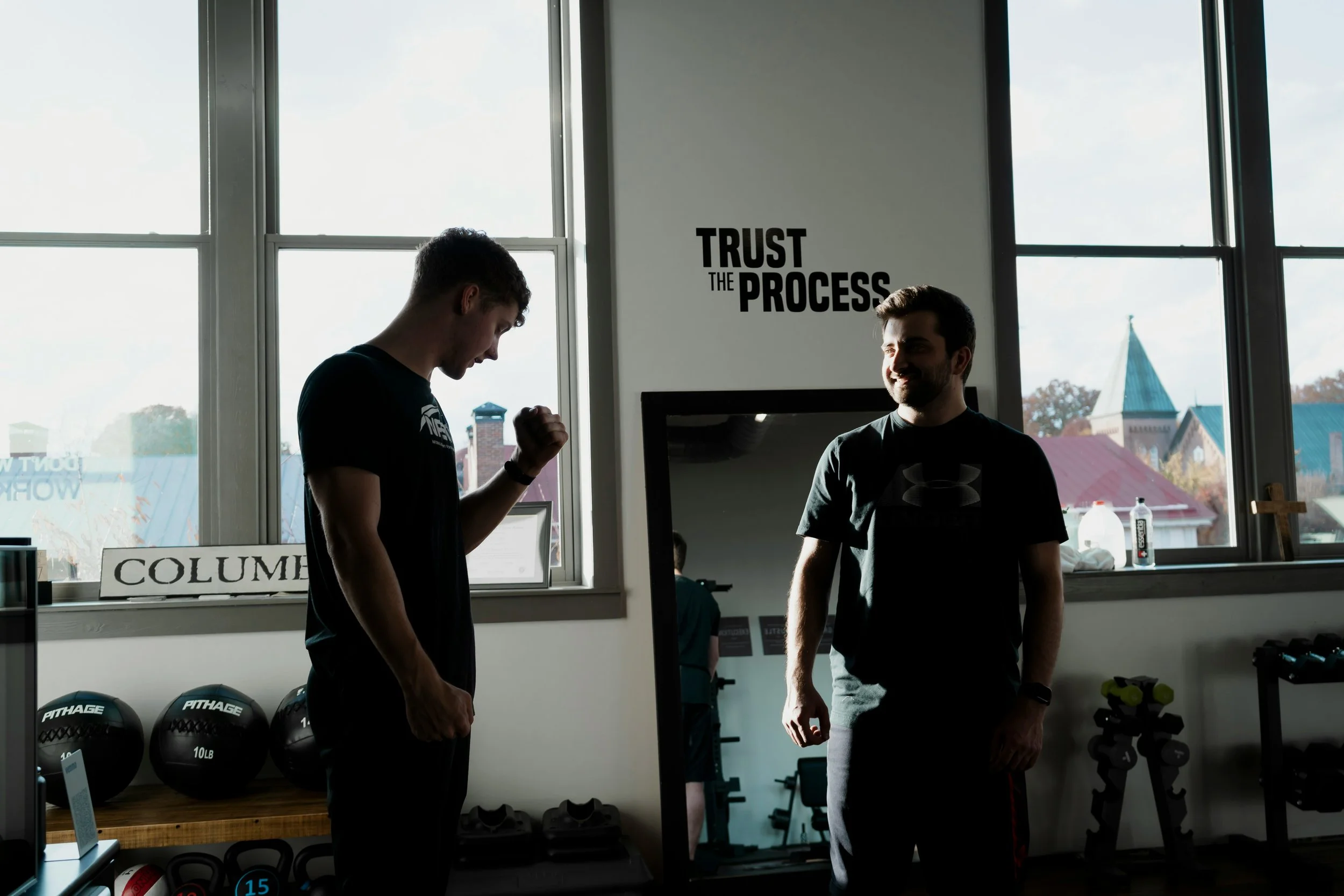
As discussed earlier, there are many ways to enhance the process-oriented perspective. There are also simple ways to practice living more in the process.
First, shifting the language we use with ourselves is one skill. For instance, what would it be like to say “Let me spend a few minutes working on this” instead of “I have to just get this done.”
Second, setting “experiential goals” allows us to think not just about what we are doing but how we want to feel while doing it.
Third, pausing to notice something sensory could help bring us back to the moment and acknowledge our efforts. Take a moment to drop into your five senses, slow down, and ask yourself, “What am I doing today to reflect my values?” In this, you are in ways building an internal sense of progress, not just an external one.
Fourth, reflect by asking yourself “What might I notice about myself if I focused more on the process rather than the outcome?” and/or “What successes might actually be unfolding that I have not noticed?”
Don’t get me wrong–outcomes are important. They can motivate us, give us direction, and help us measure progress in a meaningful way. Seeing the outcome can feel validating. However, outcomes are often moments and the process is everything else. The process is where we learn, try, stumble, adjust, grow, and become. When we allow ourselves to be in the process, we may start to notice that success is not just something waiting for us at the end. It is something we are already creating, moment by moment.
“It is when we act freely, for the sake of the action itself rather than for ulterior motives, that we learn to become more than what we were.”
References
Bryant, F. B., & Veroff, J. (2006). Savoring: A new model of positive experience. Lawrence Erlbaum Associates, Inc.
Csíkszentmihályi, M. (1998). Finding flow: The psychology of engagement with everyday life. BasicBooks.
Csíkszentmihályi, M. (2000). Beyond boredom and anxiety: Experiencing flow in work and play (2nd ed.). Jossey-Bass.
Csíkszentmihályi, M. (2008). Flow: The psychology of optimal experience. Harper Perennial Modern Classics.